How a smart parking spot could simplify E-Mobility
Electric cars are already practical, efficient, and quiet. But anyone who charges regularly knows: the current system doesn’t make it easy. Charging stations are often taken or hard to reach, cables drag through dirt, apps don’t connect – and all that, just to get some power.
The hypothesis:
E-mobility isn’t failing because of technology. It’s failing because of inconvenience. But what if parking and charging weren’t two separate actions? If the parking spot itself becomes a charging unit, driving electric becomes even more convenient than driving a combustion engine.
The idea:
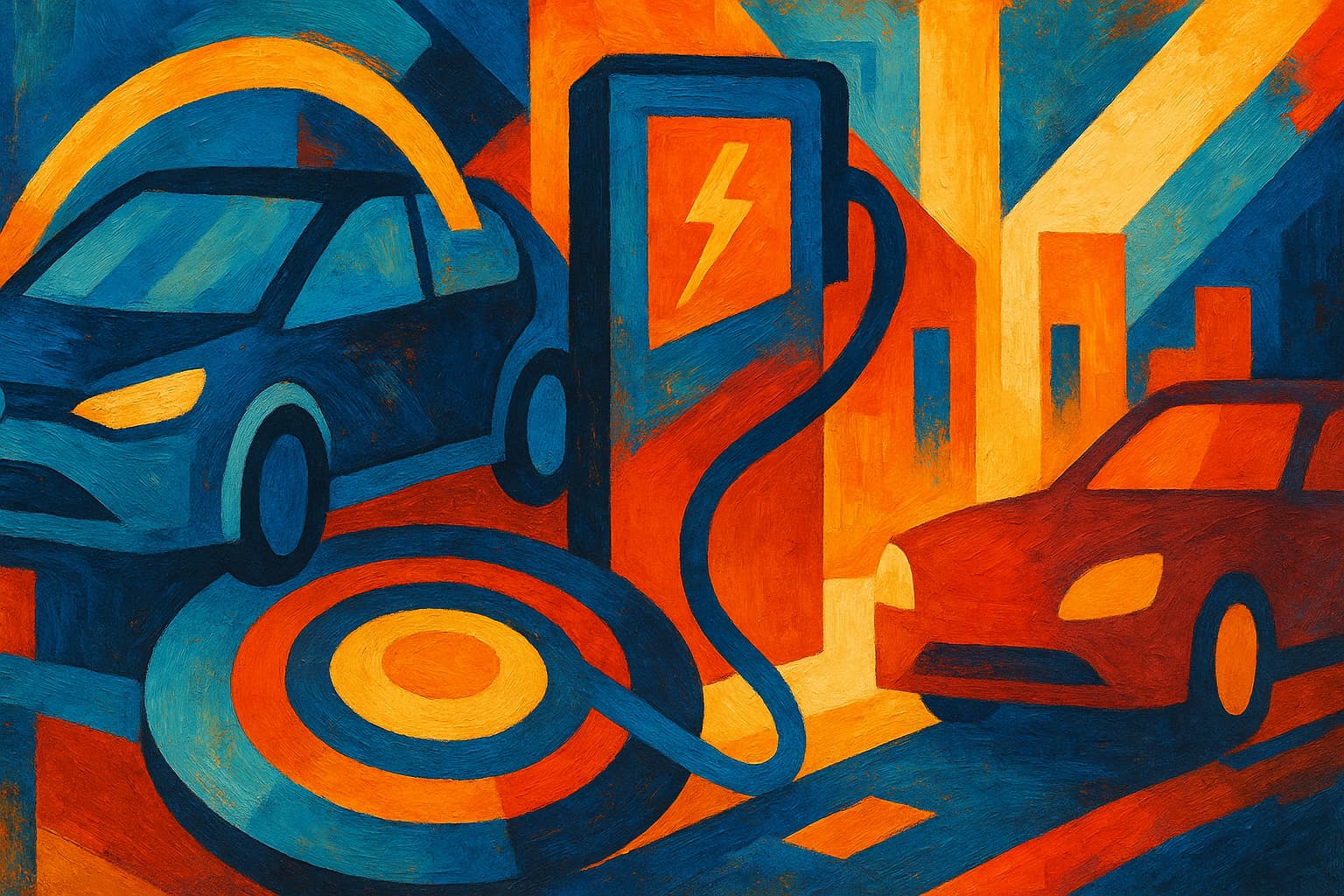
The parking spot becomes a contact-based charging station. Built directly into the ground is a robust, weatherproof charging platform. At its center: a movable module, embedded in a small shaft-like structure. Once an EV parks above it, the system detects the vehicle and automatically establishes a connection. Two contact pins align and extend. The car links with the parking spot and charging begins.
- No fumbling with cables. No precision maneuvering. No extra effort
- Gasoline cars or unauthorized vehicles trigger no response
- Billing happens automatically, per minute or kilowatt-hour, via vehicle ID, NFC, or app integration
- Existing vehicles can be retrofitted using certified upgrade kits, such as a flat underbody adapter with contact interface
But there’s more:
These smart spots aren’t just for charging. On request, vehicles become part of the energy grid:
- Charging when there’s a surplus of electricity
- Feeding energy back when there’s a shortage
Drivers can decide whether to activate this feature. It offers flexibility – for the grid, for users, and for a more sustainable energy future.
The big advantage:
These parking spots don’t require additional space. They don’t block other vehicles. They make use of what’s already there. Combustion vehicles can still park without restrictions. That makes the solution inclusive, not exclusive. A technology that grows with the city, instead of displacing it.
And the best part:
You don’t need to do anything but park. Everything else happens automatically.