Late Again
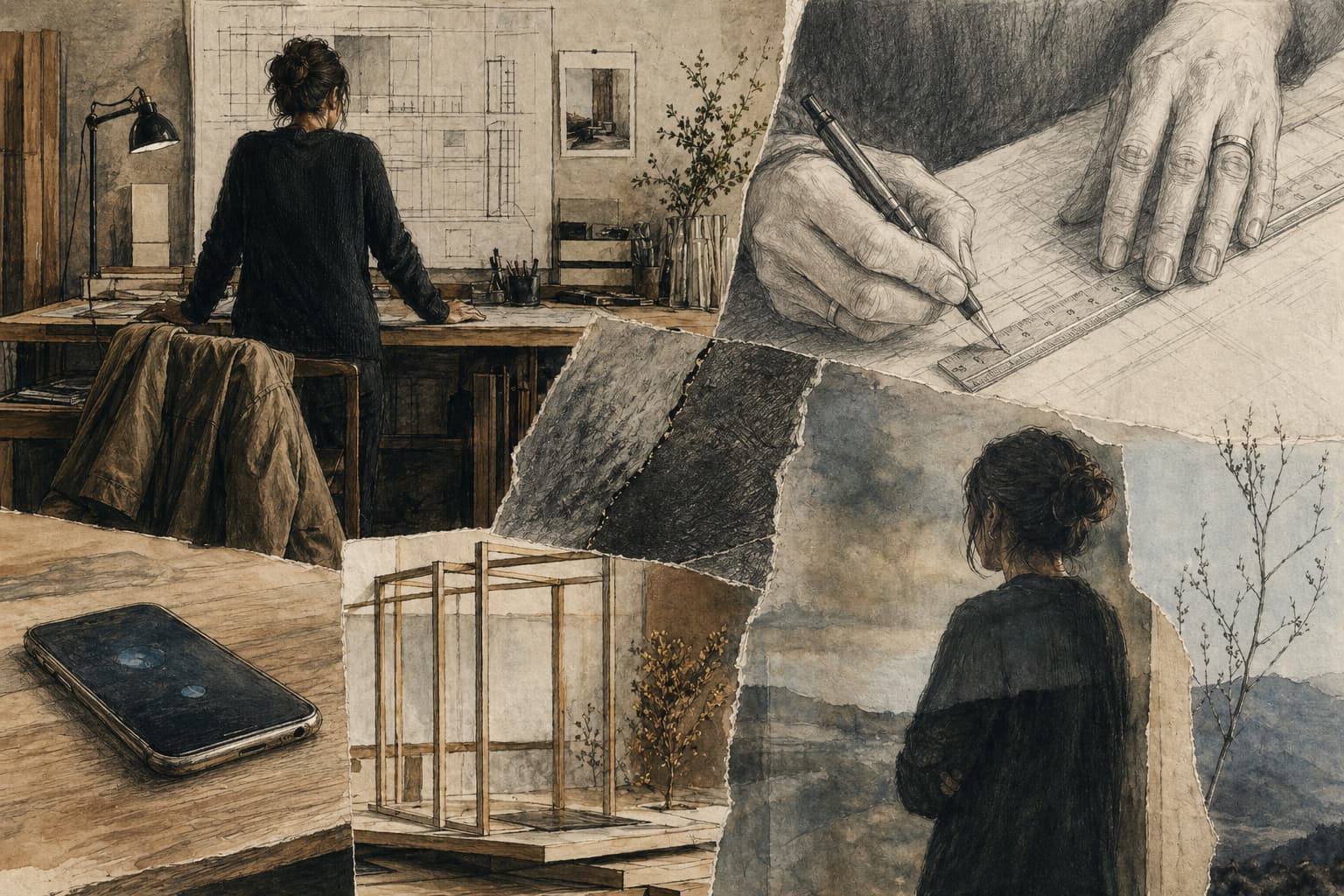
She was a few minutes late again. Not late enough for anyone to say anything. People at work had long since gotten used to it. One person gave a brief wave, another did not even look up. She hung her jacket over the chair in the office and immediately thought again of the call she had meant to make that morning. She still had not done it.
The number for the doctor’s office had been in her phone for days. It was only about an appointment, nothing complicated. At home, she had thought she would call first thing in the morning. Then she had been late getting out again. Now she was here, late as so often, and she still had not taken care of it.
Something in the workshop had already come to a stop. She went straight to the back, where one of the younger ones was standing with a tape measure in front of a half-finished piece.
“This doesn’t fit,” he said.
She saw it at once. The piece had been prepared according to plan, but the plan itself was, at one point, both clean and unusable. On paper, the sequence made sense. In the workshop, it would later collide with something that had not even been installed yet.
“Don’t keep building,” she said after measuring it quickly herself. “I’ll get the updated drawings from yesterday. Let them know up front that the other panel needs to be cut first.”
She said it calmly. While the others were still looking at the piece, she had already decided what needed to happen next. In the office, she pulled out the right drawings and saw at first glance where the information had gone missing. A small change, clearly noted, but not passed on to where it needed to go.
The phone on her desk sat silent beside the monitor. Her cell phone was lying next to it. There would have been time now. She picked it up for a moment, looked at the number, and put it back down.
After that, there were no real gaps anymore. She went back and explained what had to stay as it was and what had to be moved forward. Up front, someone asked for the materials list. In the office, a question about the schedule was waiting. At the same time, someone else wanted to know whether the finished fronts could still go out today. She answered without needing much time to think. Yes, but only if the fittings arrived by noon. No, not in that order. First the change, then cut the panel.
It was not a special state, more a kind of practical sharpness she slipped into as soon as the world around her offered enough resistance. Loose things became things that could be arranged. Problems had measurements. Decisions had direction. None of it was easy. But none of it was formless.
By around ten, the first unease had settled. The mistake had not disappeared, but everyone knew what they were doing again. Someone came over to her with a drawing and asked if she could take a quick look at another dimension. She gave it a brief glance and told him where the error in thinking was.
“Good that you’re here,” he said, half on his way out.
A little later, the call came back to her mind. The practice was still open in the morning. It still was. She could call now. She even tapped in the number, let the phone rest in her hand for a moment, and then put it back down.
The rest of the morning passed quickly. Workshop, office, materials, drawings, questions. In passing, she caught one uncertainty that would otherwise have grown into something bigger later, and a moment after that she was back again between trestles and panels.
Anyone who saw her there would not have guessed that even leaving the apartment that morning had already been difficult for her. No one would have thought that the same woman who could see with half a glance why something would not work was unable, for days, to call a doctor’s office. And yet it was true.
At midday she ate a roll standing up and thought of the call again. The practice was still open. The thought was there, clear enough, and still it disappeared again without anything happening.
By the afternoon, things at work had become orderly again. What had stalled in the morning had been sorted out enough that no one needed to ask much anymore. She answered an email, changed something else in the plan, and told a colleague in passing what needed to be done first tomorrow. He simply nodded and kept walking.
As closing time drew nearer, the noise thinned out. She wrote something else into the plan for the next day and thought once more of the practice. If she called right now, someone might still pick up. It would hardly take a minute. Then she set the pen down beside her and looked at her phone. The number was still there. By then, the practice had closed.
One of her colleagues stuck his head through the door and asked if she could come by the construction site with him briefly the next morning because he would feel more certain about two points if she looked them over once more beforehand. “Yes,” she said. “I will.”
A little later, she turned off the light in the office. From the outside, it had been a good day. They had caught the mistake early enough, reorganized the workflow, and lost nothing important. For tomorrow, it was already clear again what would come first. Down in the workshop, someone said goodbye with a half-joke about her usual lateness, friendly and without blame. She gave a quick grin, took her bag, and went outside.
Outside, she stood still for a moment. The phone in her jacket pocket was hardly more than the small remainder of a day that had otherwise been manageable in almost every direction. Then she kept walking.
Tomorrow, she thought. And even that did not sound like a plan.