How a shift in perspective can create new paths
Not every person who acts wrongly is a bad person. Some are overwhelmed. Others carry old wounds. Many have never truly experienced what it feels like to be needed. And yet, these are often the people who fall hardest in our society.
Those who break rules are punished; with fines, with prison, with exclusion. And still, very little changes. On the contrary: once someone is caught in the system, it’s incredibly hard to escape. Punishment rarely works like a bridge. It works more like a wall.
What if there was another way?
What if a person who fails is not reflexively punished, but confronted with their behavior and simultaneously rewarded for something good? What if we said: “Look at what went wrong. But also look at what you’ve achieved, and what you can do better moving forward.”
Because punishment creates fear. Reward builds trust. And trust is often the first step toward real transformation.
A ticket instead of a sentence
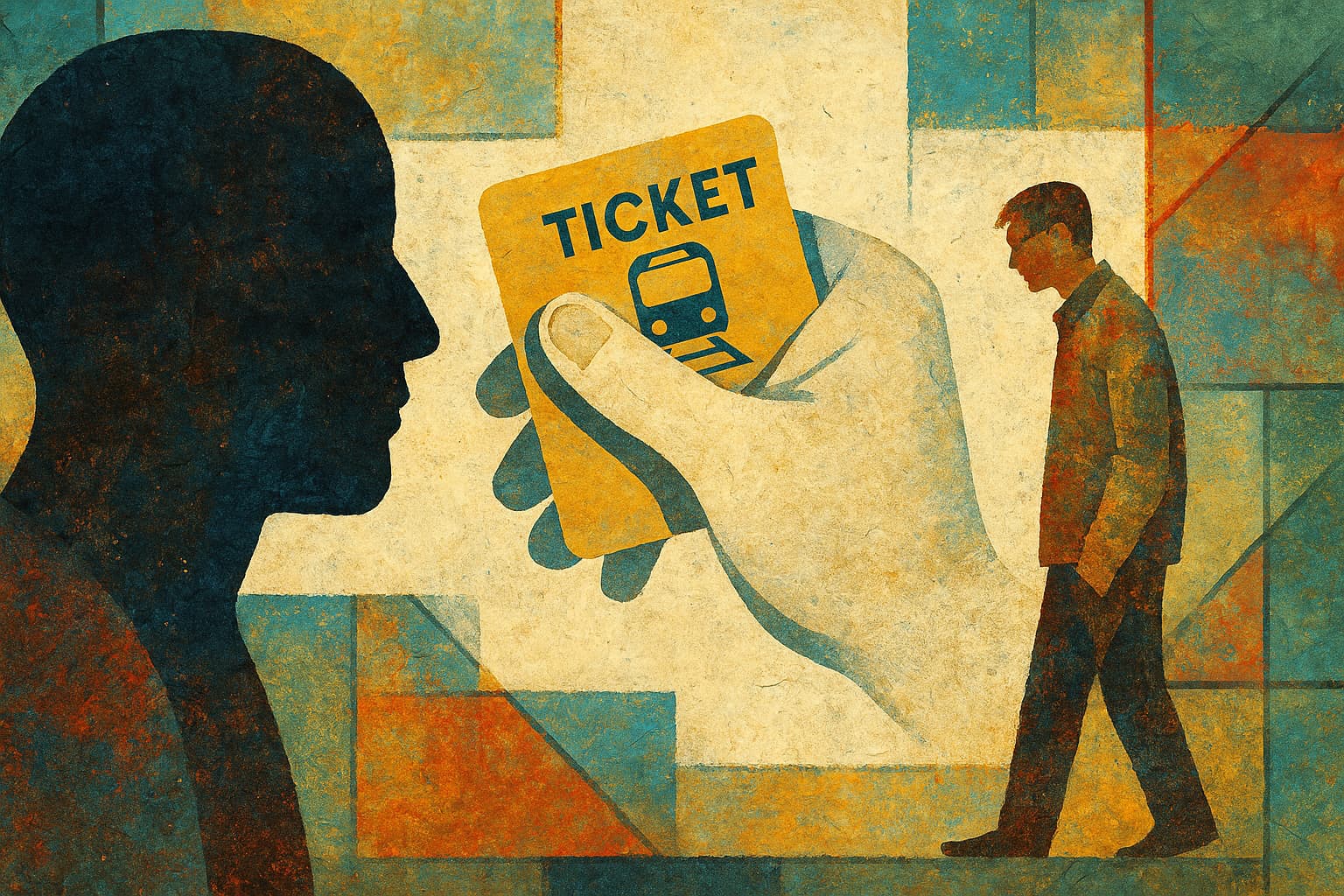
A poor person rides without a ticket. Not out of defiance, but because they can’t afford a monthly pass. They get caught and receive a fine they can’t pay. On the third offense, they may face prison time; expensive for society, meaningless for everyone involved. After release, the cycle begins again. Nothing has changed. There was punishment, but no solution.
But what if there were a real offer instead?
“Here is your transit pass. It’s yours permanently. The only condition: no further offenses.”
This wouldn’t be a free pass, but a leap of trust. An invitation to take responsibility. And a solution that works immediately, without court proceedings, prison time, or stigma.
Prevention Instead of Escalation
Such a model could do more than react. It could prevent. If low-income individuals were proactively supported, for example, with a free transit pass under the simple condition of committing no further crimes. It could stop a downward spiral before it even begins. It wouldn’t be a handout without expectation, but a stabilizing offer. A chance to enable participation in society before isolation and pressure start shaping behavior. Because those who feel they belong to a community are more likely to act in its interest.
Trust Changes More Than Fear
People aren’t best reached through severity, but through connection. Through respect. Through the feeling of being seen not just as a problem, but as a person with potential.
Such a shift in perspective wouldn’t ignore wrongdoing. It would respond to it differently. Not with harshness, but with clarity. Not with suspicion, but with the willingness to believe in something good, even when it’s not yet visible.
Because those who experience trust from others often begin, for the first time, to trust themselves. And to see responsibility not as a burden, but as a chance.