Why Inner Order Has More to Do with Music Than with Discipline
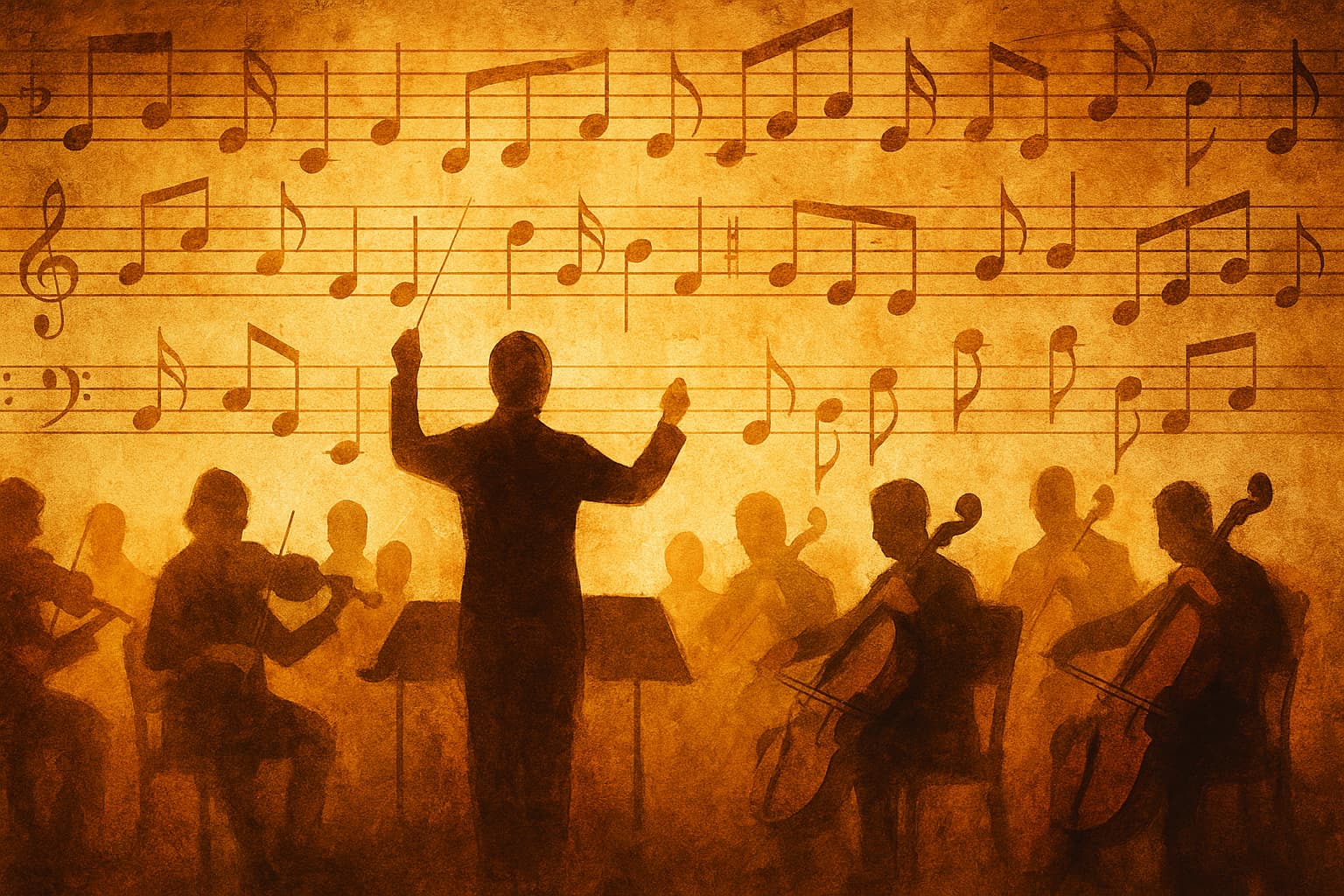
Perhaps personality is not a house with rooms to enter or avoid, but an orchestra composed of many inner voices. Not a metaphor for harmony, but a structure for living interplay. Each part is an instrument, carrying its own sound, its own history, its own expression. Some are familiar and confidently played, others barely tuned, anxious or hesitant. Yet in an orchestra, no one is excluded. There is no forgetting, only waiting for the right moment. Not all play at once, and not all at the same volume, but each belongs to the whole.
To keep this whole from dissolving into noise, guidance is needed. Not control in the sense of domination, but a form of inner direction that does not judge, but listens. The conductor of this structure is not a single figure, but a function of consciousness that knows when a part should step forward and when it should recede. It does not decide between right and wrong, but between timing, dynamics, and relation. It gives the triangle its place, but preserves the order of the symphony. It gives the brave one space, without silencing the compassionate one. And when the childlike part appears, it is not sent away, but acknowledged as part of the score.
Such a personality is not idealized, not complete, not perfect. But it is open to integration. It does not thrive on control, but on relationship. The parts do not compete; they cooperate with awareness of their differences. It is not necessary that all speak equally. It is enough that all can be heard. Perhaps from such an inner structure, no constant harmony arises, but a rhythm one can follow. And perhaps that is precisely the condition for inner freedom.